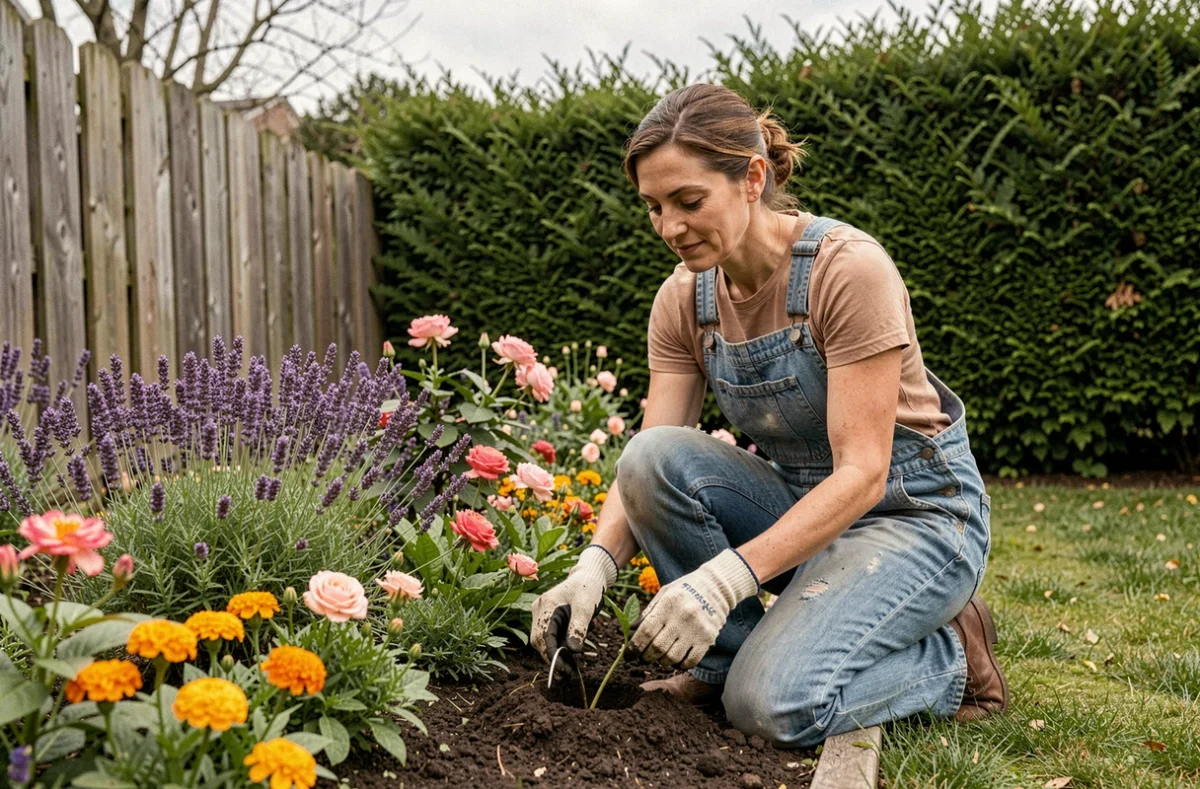
A perennial bed planted in October can end up overrun by an ornamental grass that has been banned from sale since March 2023. Pampas grass (Cortaderia selloana) is now on France’s official list of invasive alien species, following a ministerial order. Creating a garden that blooms throughout the seasons is therefore about more than spreading flowering periods across twelve months: you also need to check the regulatory and health status of every plant before putting it in the ground.
Invasive species and toxic plants: what to check before planting
In practice, the issue can arise as soon as you visit a garden centre. A plant with attractive foliage or late-season blooms may appear on the official list of plants that pose a health risk. This list includes species that can cause problems if ingested, produce allergenic pollen, irritate the skin or cause phototoxic reactions.
It is important to understand the distinction: a plant flagged as toxic is not necessarily banned from planting. Sellers are required to inform buyers of the risks, but planting it remains legal. By contrast, a species classified as an invasive alien species, such as pampas grass, can no longer be sold or planted.
If children or pets use the garden, it is worth checking both lists before planning your beds. For example, planting foxgloves at the back of a bed that a three-year-old can reach creates a real safety issue that visual harmony alone cannot solve. You can find plant selections suited to these requirements at https://www.unefleurunjardin.com, which offers planting schemes designed for different garden uses.
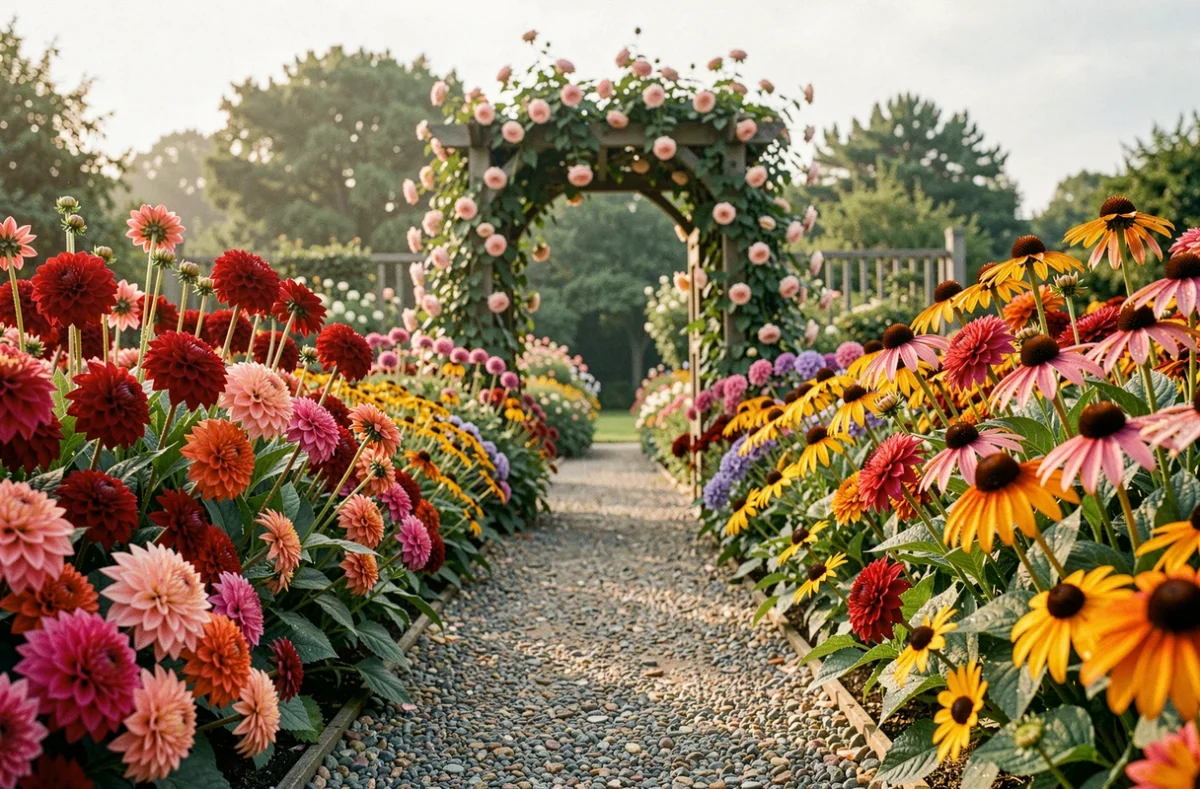
Perennials and staggered blooms: structure a bed for all four seasons
A flower bed that stays in bloom all year is based on a simple principle that is harder to put into practice: every month should have at least two species in flower. Start with the lean periods—winter and late autumn—then fill in spring and summer.
Build the bed around the challenging months
Winter is the bottleneck. Hellebores flower from December to March, snowdrops from January, and winter heathers from November to April. These three groups provide the foundation for the rest of the planting.
For autumn colour, use asters, Japanese anemones and sedums. Planting them in the foreground keeps the bed colourful as the grasses in the background dry out.
Fill out the display with long-flowering spring and summer plants
Spring and summer offer plenty of choice, which is when it is easy to overdo it. It is better to limit the palette to three or four dominant colours than to accumulate too many varieties.
- Hardy geraniums (May to September): long-lasting ground cover, low maintenance and tolerant of partial shade
- Shrubby salvias (June to October): a long flowering period that bridges the transition to autumn and attracts plenty of pollinators
- Catmints (May to September): blue-violet drifts that define the foreground and tolerate dry soil
- Coneflowers (July to October): medium height, with spent flower heads that provide food for birds in winter
Combining these long-flowering perennials with the winter foundation covers the entire calendar without relying on annuals, which need to be replaced every year.
Colours and structure: create a bed that reads well from a distance
A harmonious garden is not judged plant by plant, but from three metres away. A planting scheme works when you can make out clear blocks of colour, rather than a patchwork of scattered accents.
Planting each species in groups of at least three or five creates this mass effect. A single salvia plant in a square metre of geraniums disappears visually. Five plants grouped together create a clearly defined patch.
Use three height levels to add depth
Structure the bed in three layers: ground cover along the edge (thyme, heucheras), medium-height perennials in the middle (salvias, geraniums), and tall plants at the back (non-invasive grasses such as Miscanthus sinensis, and coneflowers). This layering adds depth, even in a small space.
Arrange colours in adjoining blocks. Two complementary colours (purple and yellow, orange and blue) placed side by side intensify each other. Three neighbouring colours on the colour wheel (pink, mauve, blue) create a softer mood. Avoid mixing more than four shades in a single bed—it is the most reliable rule for achieving a cohesive result.

Flowering and biodiversity: choose plants that support pollinators
A bed designed to stagger flowering periods also serves an ecological purpose, provided you choose single-flowered varieties rather than double-flowered cultivars. Double flowers may look more spectacular, but they often produce less nectar and pollen, making them less useful to bees and butterflies.
Leaving a few patches of bare soil or light mulch between clumps gives solitary insects places to nest. You can also leave the dry stems standing through winter instead of cutting everything back in November: they provide shelter for beneficial garden insects and add graphic texture to the winter bed.
It is tempting to fill every square centimetre. A bed that gives plants room to breathe, with spacing suited to their mature size, stays healthier and needs less attention over the long term.
The success of a year-round flower garden depends largely on the soil and exposure, which can vary across even a single plot. A full-sun perennial planted beneath a deciduous tree will flower well in spring, before the leaves emerge, but will struggle in summer. Observing your garden through a full growing cycle before planting is the most worthwhile step, even if it means waiting a season.