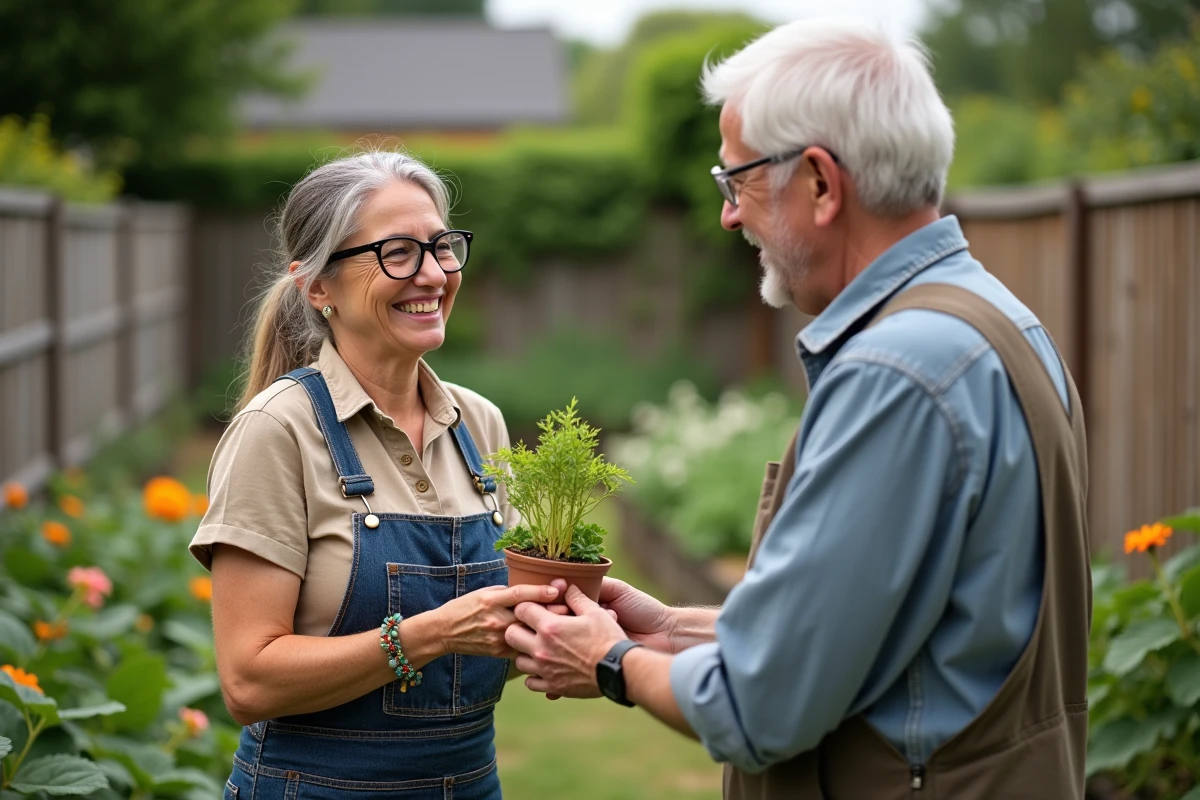
A handful of seeds is sometimes enough to awaken an entire neighborhood. The exchange of horticultural know-how among individuals has never been more dynamic, even as individual gardening spaces become rarer in urban areas. The sharing of tools, seeds, or technical advice is giving rise to new local support networks, countering the logic of individual consumption.
Digital platforms and neighborhood collectives now facilitate the sharing of experiences, allowing everyone to overcome isolation and enhance their practical skills. These initiatives transform practices and establish unexpected forms of local solidarity.
Shared gardens: much more than just a green space between neighbors
Forget the impersonal plot wedged between two buildings: a shared garden is a vibrant meeting point where neighborhood life is created season after season. In these collective green spaces, families, retirees, students, and passing neighbors come together to cultivate both their vegetable garden and social connections. Everyone brings their desires, ideas, or simply their eagerness to learn from others.
Here, the rule is cooperation. No leader, but ongoing exchanges, collective decisions, and a place for everyone. A collective garden thrives on everyone’s knowledge: some share their pruning techniques, while others demonstrate how to successfully sow seeds. Improvised or organized workshops punctuate the seasons, and every helping hand creates a new opportunity to get to know one another. It is precisely this spirit of mutual aid that can be found online when one wishes to share gardening skills.
But these gardens are not just places of conviviality. A shared vegetable garden transforms the space and local dynamics. Here, biodiversity is experimented with, water usage is optimized, insect hotels are installed, and composting is done collectively. Children discover nature, while the elderly pass on their knowledge of plants. Associations, local authorities, or businesses often support these actions to ensure their lasting impact and spread these examples of urban resilience throughout the city.
This movement disrupts solitary consumption habits. By sharing knowledge, lending tools or harvests, we revive the solidarity of yesteryear. Strengthening social ties also means surrounding oneself with allies for the small and big challenges of daily life.
Why sharing gardening tips changes the life of the neighborhood?
Those who get involved in their free time quickly realize: sharing tips transforms the way a neighborhood breathes. The sharing of gardening skills acts as an invisible yet powerful foundation. Here, knowledge transfer brings everyone to the same table: children, parents, students, newcomers, or local seniors.
Over the seasons, everyone finds their role. The youngest learn patience and curiosity, adults exchange ecological methods, and the elders keep watch. This mixing stimulates neighborhood life and opens the door to new initiatives.
In practical terms, these exchanges take many forms. Here are some situations often encountered in these collective gardens:
- A resident shares their cutting technique during a morning organized in the vegetable garden.
- A neighbor introduces the younger ones to the discovery of urban biodiversity around the flower beds.
- A small group meets every week to manage watering or turn the compost together.
Through these encounters, trust grows as quickly as the tomatoes. Behind every piece of advice shared lies an action to improve everyone’s life, a step closer to true neighborhood solidarity.
From platforms to workshops: concrete solutions for cultivating mutual aid near you
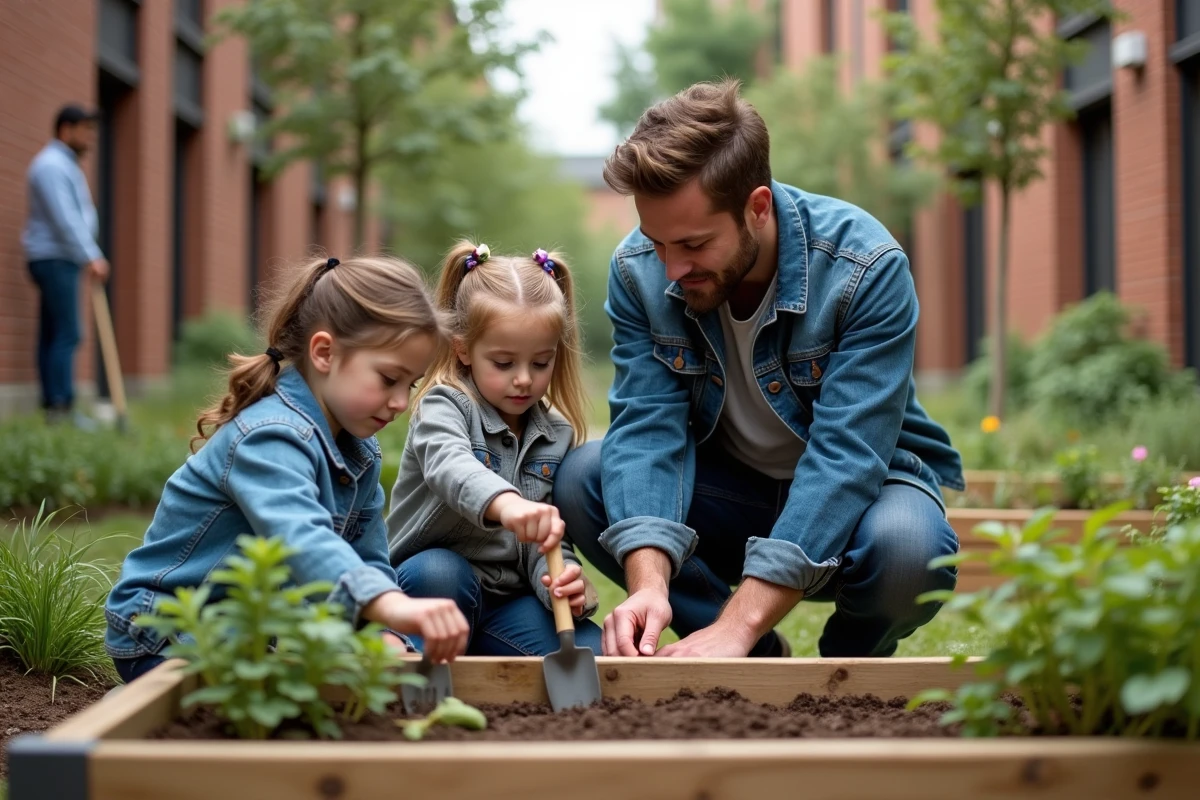
On the ground, mutual aid is not decreed. It is cultivated through simple actions: practical workshops, seed swaps, organizing parties or shared meals. Shared gardens then become the beating heart of an entire neighborhood, where people equip themselves together, exchange tools or harvests, and where meetings rhyme with knowledge transfer.
Often, these spaces come alive thanks to collective organization. Some bring a table, others set up a composter or a play area for children. Associations, local authorities, or nearby businesses lend a hand, whether to install a shelter or to advise on the ecological management of the space. The collective garden then overflows its enclosure, radiating throughout the urban environment.
To illustrate the extent of the movement, here are a few concrete examples:
- Neighbors lend each other tools or organize collective workdays to maintain the plot.
- Workshops bring together children and adults, promoting age mixing and shared discovery.
This daily network builds the capacity to face challenges together. A simple exchange, a shared seed, and an entire social ecosystem is strengthened. Imagine tomorrow: a shared tomato harvest, a neighbor ready to lend a hand, and your neighborhood rediscovers the meaning of community, hands in the soil.