
An apartment building door that buzzes without opening, a gate that only responds every other time: in most cases, the problem isn’t the intercom or keypad, but the recessed electric strike itself. Housed in the door frame, this mechanism is subjected to mechanical and electrical stress with every opening cycle. A few regular checks are all it takes to prevent breakdowns and significantly extend its service life.
Aligning the latch bolt and strike: the first thing to check before any work
Have you ever noticed that a door slams harder on some days? It’s not always the wind. A latch bolt pressing against the strike at an angle creates abnormal friction. This mechanical strain can prevent the door from unlocking and accelerate wear on the internal components.
There’s a simple way to check the alignment. First, test the control with the door open: the strike should release without resistance. Then close the door and activate the control again. If unlocking becomes difficult or silent when it should produce a clear click, the latch bolt is putting excessive pressure on the strike.
The cause is often a sagging door or play in the hinges. Adjusting the hinges or repositioning the faceplate can fix the problem without touching the electronics. This check should come before any other maintenance, as misalignment can mask or worsen all other symptoms.
A detailed guide to maintaining a recessed electric strike can help you carry out these checks in the right order.
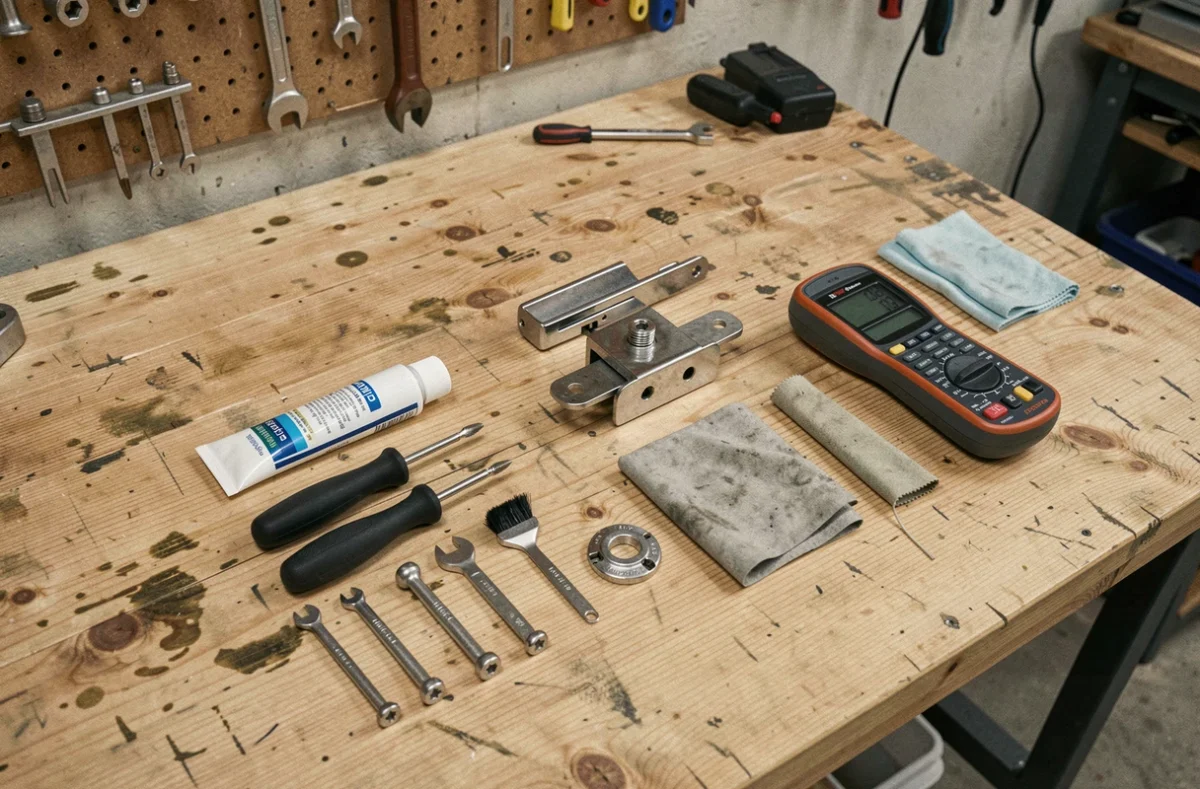
Lubricating a recessed strike: why reaching for grease can be risky
When a mechanism starts sticking, the first instinct is often to apply lubricant. With a recessed electric strike, this can do more harm than good.
The problem is its location. A recessed strike sits inside a narrow cavity in the door frame. Greasy lubricants (such as WD-40 or white grease) attract dust and metal particles from normal wear. Within a few months, a sticky residue can build up around the moving latch bolt and restrict its travel.
The right product and application point depend on the model. Some manufacturers recommend a dry lubricant (graphite or PTFE) on the moving latch bolt, while others prohibit lubricating any internal parts. Applying a generic product without consulting the manufacturer’s instructions means working blind.
What the instructions say—and what people forget to read
The strike’s technical specifications generally state three things: which lubricants are compatible, how often to apply them, and which areas to avoid. On fail-secure models, the internal solenoid must never be treated with lubricant. On fail-safe strikes, the return spring may require a different treatment from the latch bolt.
Before lubricating, cleaning the strike cavity with compressed air removes accumulated debris. This dry cleaning is often the only maintenance actually needed between professional services.
Power supply and voltage: the silent failures
A recessed electric strike operates at low voltage, usually 12V or 24V depending on the model. Even a slight fluctuation in the power supply can affect its operation without causing a complete failure.
The symptoms are subtle: unlocking takes longer, the click is less distinct, or the strike only releases after two consecutive pulses. These signs often point to a failing transformer or wiring whose resistance has increased over time.
- Check the transformer’s output voltage with a multimeter: it should match the value specified for the strike, with no significant deviation.
- Inspect the terminal block connections, as oxidized contacts can cause micro-interruptions that are invisible to the naked eye.
- Check the cable between the transformer and the strike, especially where it passes through areas exposed to moisture or friction.
Insufficient voltage causes premature solenoid wear, as the mechanism tries to activate without enough power. The coil heats up more, gradually degrading the insulation around the conductor.

Corrosion and moisture: adapt maintenance to the environment
A strike recessed into an outdoor gatepost won’t age in the same way as one in a heated apartment building lobby. Exposure to the elements, sea spray, or simply high humidity accelerates the oxidation of metal components.
During a visual inspection, pay particular attention to two signs:
- Rust or verdigris around the faceplate or on the moving latch bolt, indicating that water is getting into the cavity.
- Swelling or warping of the frame (wood or PVC), which changes the strike’s position and creates an entry point for moisture.
- Wiring with a cracked or hardened protective sheath, leaving the conductors exposed to corrosion.
Checking that the installed model is designed for outdoor use can prevent a lot of problems. The technical specifications state the operating temperature range and the enclosure’s protection rating. A model intended for indoor use may last a few years outdoors, but failures will eventually become more frequent.
A weather seal that’s often overlooked
Some recessed strikes have a perimeter seal between the faceplate and the frame. This seal prevents rainwater from running into the cavity. Over time, it can compress or come loose. Replacing it during an annual inspection is a simple way to protect the entire mechanism.
Inspection frequency and signs of wear to watch for
There’s no universal schedule. How often you need to inspect the strike depends on the number of daily cycles and the environment. A strike in a multi-unit building that’s used dozens of times a day needs more frequent checks than one on a residential gate.
A visual and functional inspection twice a year is a reasonable baseline for most installations. Signs that call for prompt attention include unusual noises when unlocking, a slower response time, or a latch bolt that remains stuck in the open position.
A mechanism that starts showing signs of wear never gets better on its own. Every additional cycle in a degraded condition accelerates wear on nearby components, from the solenoid to the access control system that operates it. Acting at the first sign of trouble is the most effective way to avoid a complete replacement.