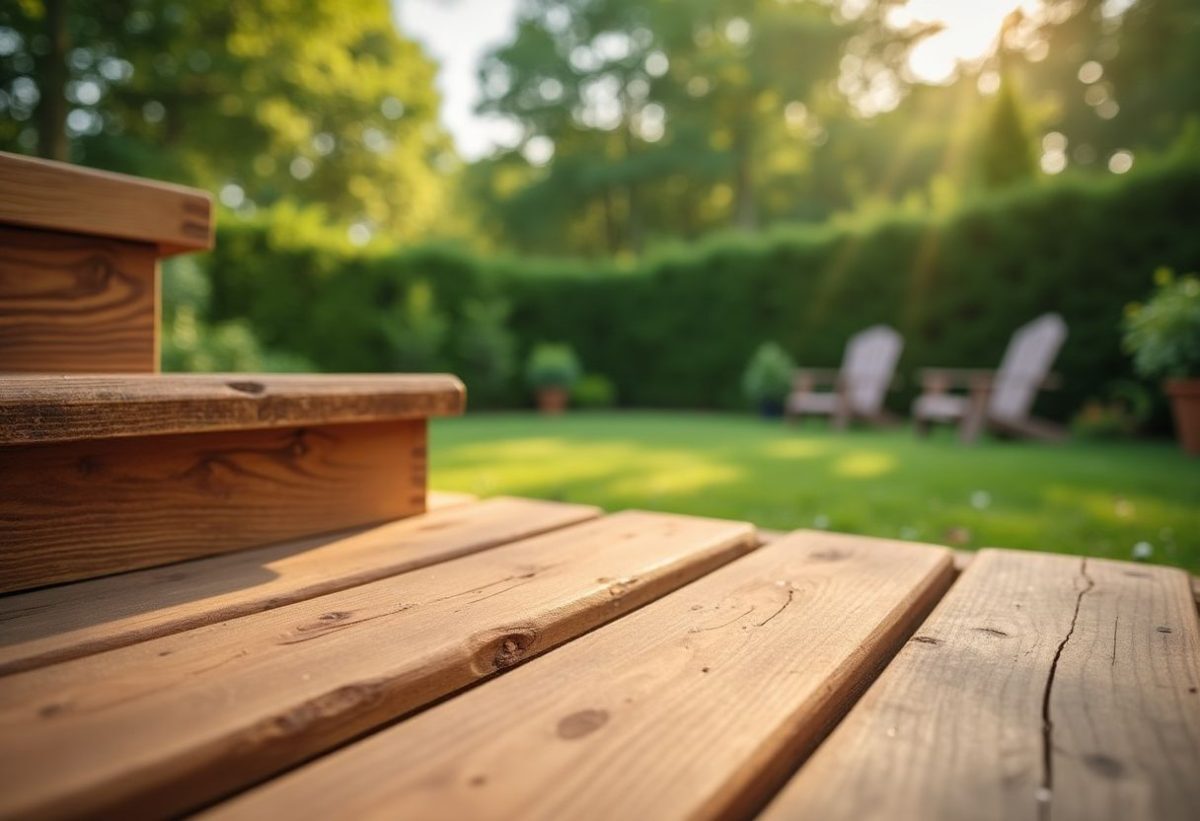
Building a wooden deck is a wonderful endeavor that transforms your outdoor space into a haven of peace and conviviality. However, one often overlooked detail, yet crucial for the success of your project, is the length of the deck boards. Choosing the right size influences not only the aesthetics but also the durability and maintenance of your installation. Deciding on the appropriate length is not just a matter of aesthetic preference; it has a profound impact on the functionality and longevity of your deck.
Understanding the stakes, options, and implications is essential for creating a layout that meets your needs while respecting the constraints of your environment.
Technical considerations for choosing the length
The technical aspects play a major role in determining the length of your deck boards. Without a thorough understanding of these elements, it is easy to make mistakes that could affect the structural integrity of your deck.
- Structural stability: The longer the board, the more supports it requires to avoid sagging. This may involve adding additional joists, increasing the time and cost of construction.
- Type of wood: Some woods, like teak or ipe, behave differently depending on their length. Exotic woods, for example, are often denser and can be used in longer lengths without compromising stability.
- Compliance with standards: Ensure that the chosen length complies with local building codes, which may limit the size of the boards for safety reasons.
Aesthetics and design: the impact of length
Beyond technical considerations, the choice of the length of the deck boards has a significant effect on the appearance of your outdoor space. When well chosen, it can enhance the overall design and create a harmonious atmosphere.
Long boards create a visual effect of continuity and elegance, perfect for large areas. They also reduce the number of visible joints, giving the deck a cleaner and more fluid look. Conversely, shorter boards can fit into smaller or irregular spaces, offering greater design flexibility. They also allow for playing with various patterns and arrangements, such as herringbone or mosaic, adding an artistic touch to your project.
Associated costs: savings and expenses
The budget is an inevitable aspect of any construction project, and the length of the deck boards can have a direct effect on the associated costs.
- Material prices: Longer boards are often more expensive due to the increased complexity of their production and the limited number of woods capable of supporting large lengths without defects.
- Transportation costs: Transporting long boards can be more costly and logistical, as they require specific vehicles to be delivered safely.
- Installation costs: Installing long boards may require specialized skills, thus increasing labor costs.
Environmental considerations and sustainability
In the current context of heightened awareness of environmental issues, it is relevant to integrate the ecological dimension into the choice of the length of the deck boards. Choosing an appropriate board length can help minimize waste and optimize resource use.
By opting for standard lengths, you reduce the number of cuts needed, thereby limiting wood waste.
Additionally, some suppliers offer FSC or PEFC certified boards, ensuring responsible forest management. For a sustainable solution, consider boards made from local wood or recycled composite materials, reducing the carbon footprint of your project.
Taking these various aspects into account will help you choose the board length that best fits your project while respecting your budget and ecological values.
To learn more about the available options and better understand the implications of each choice, consult this guide on wooden decks.