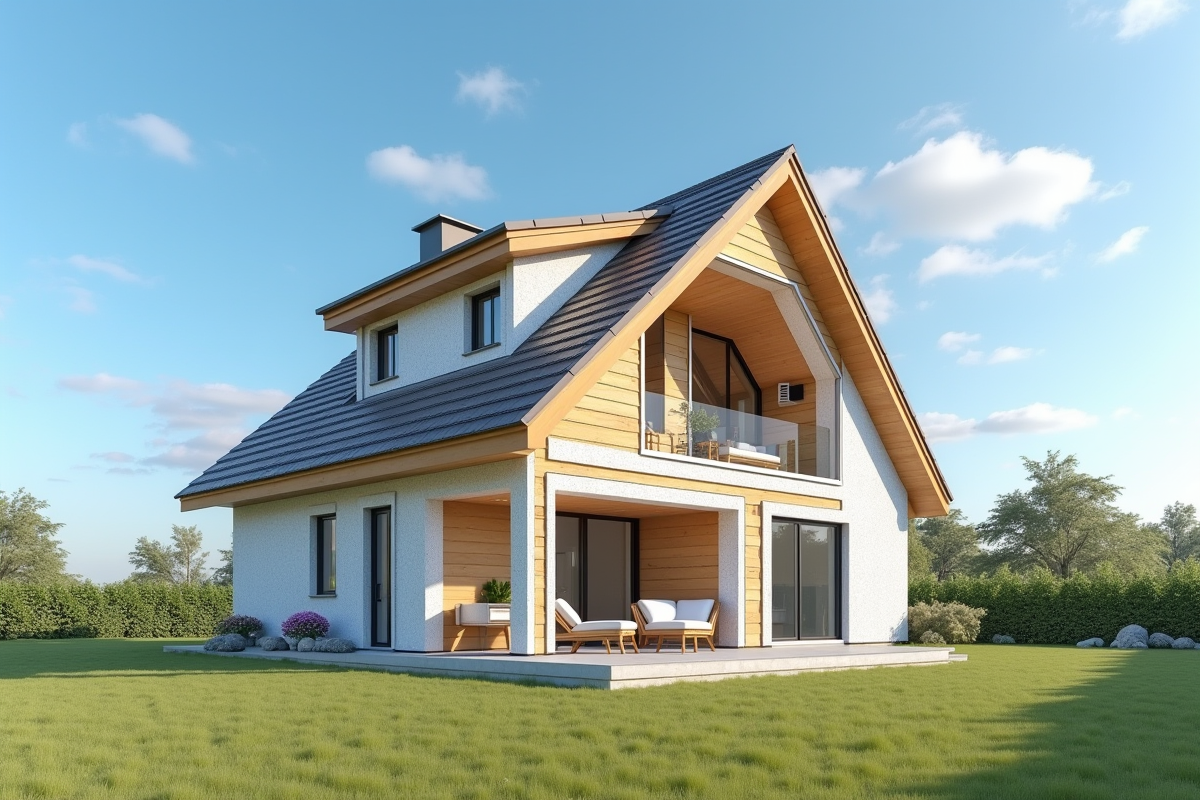
Energy efficiency has become a major concern for homeowners looking to reduce their carbon footprint while saving on their energy bills. In this context, thermal insulation plays a crucial role. One of the most effective and innovative methods to improve the energy performance of buildings is external insulation. This technique not only provides optimal thermal comfort but also helps preserve the aesthetics of facades while increasing the value of your property.
What is external insulation?
Before examining the practical details, it is important to understand what external insulation really is. It involves wrapping the building in an insulating layer on its exterior walls, thus forming a barrier against heat loss in winter and maintaining interior coolness in summer.
This method effectively addresses thermal bridges, those weak areas where heat escapes more easily. It also offers continuity in insulation that is difficult to achieve with other methods, thus ensuring better overall thermal performance.
The installation of external insulation can be done using various materials, each with its own specificities and advantages depending on the needs and constraints of the building.
The advantages of external insulation
Choosing this type of insulation offers numerous undeniable benefits. These manifest both in energy and aesthetic terms, as well as economically.
- Improved energy efficiency: By reducing heat loss, this insulation allows for significant savings on heating bills.
- Increased thermal comfort: It ensures a stable and pleasant indoor temperature, both in summer and winter.
- Preservation of interior space: Unlike interior insulation, it does not encroach on the living area.
- Aesthetics and property value enhancement: It allows for modernizing the exterior appearance of the building, thus increasing its value on the real estate market.
Disadvantages to consider
Despite its many advantages, this technique is not without some drawbacks that should be taken into account before proceeding.
The main obstacle is often related to the initial cost, which can be high. However, this investment is generally recouped in the medium term thanks to the energy savings achieved. Additionally, implementation requires technical expertise and can be complex, especially for older buildings or those with specific architectural forms.
The materials used for external insulation
The choice of materials is a crucial step in carrying out your insulation work. Their selection will depend on various factors, including the local climate, the configuration of the building, and the available budget.
- Rock wool: Valued for its excellent thermal and acoustic performance, it also offers great fire resistance.
- Expanded polystyrene (EPS): Economical and lightweight, EPS is easy to handle and install, although it is less effective acoustically.
- Wood fiber: An eco-friendly material par excellence, wood fiber is ideal for those who prioritize sustainable and environmentally friendly solutions.
- Polyurethane: Providing exceptional thermal insulation, this material is often used for buildings requiring high-performance insulation.