
Clothing rental involves paying a temporary usage fee for a textile item, instead of becoming its owner. This model relies on sharing: the same garment passes between several successive users, which increases its number of wears and reduces the quantity of new items produced.
Textile footprint and sharing logic: what clothing rental changes
The textile industry is among the most polluting sectors. The production of a single garment consumes water, fibers, chemicals, and long-distance transport. When this garment is worn only two or three times before being forgotten at the back of a closet, the ratio of resources consumed per use becomes very unfavorable.
Rental addresses this ratio by focusing on the numerator: each rented item multiplies its users and occasions for wear. A coat worn by four people over two winters divides its manufacturing impact by four, provided that cleaning and logistics do not negate the gain. This is precisely where the recent debate has shifted.
Platforms like Hylla structure this circuit by centralizing the supply, managing returns, and maintaining the items, which limits the chaotic back-and-forth between individuals.
Rebound effect and transport: when renting pollutes more than buying
The ecological promise of rental does not hold true in all cases. Several recent analyses point to rebound effects that degrade the environmental balance of the model.
The first rebound effect is behavioral. Some users, freed from the budget constraint of purchasing, rent more items than they would have bought. The volume of clothing in circulation then increases instead of decreasing.
The second factor is logistical. Each rental generates a complete cycle: shipping, return, professional cleaning, reconditioning, reshipping. Transport by individual parcel and dry cleaning increase the carbon footprint per use. For a frequently worn everyday item (a pair of jeans, a basic t-shirt), purchasing a durable garment often remains preferable.
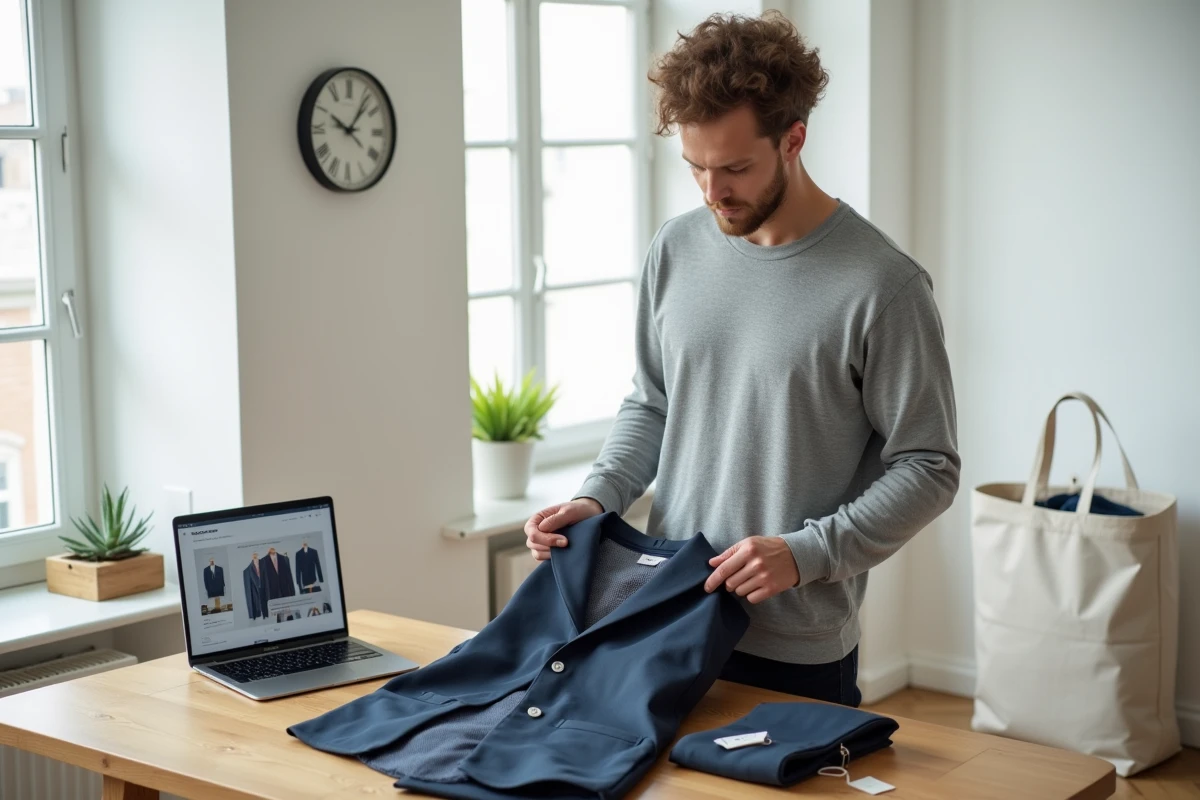
Rental is mainly justified for items used occasionally: formal dresses, evening wear, maternity clothes, designer pieces worn once or twice a year. For this type of use, the environmental gain is real and measurable.
Hygiene and traceability of rented items: the barrier that has become a selection criterion
Trust in the condition and cleanliness of rented clothing represents the main obstacle to adopting the model. Serious platforms have understood this and invest in three areas:
- A standardized cleaning protocol between each rental, with documented quality control before reshipping.
- Traceability per item, recording the number of rentals, repairs made, and the general condition of the garment at each return.
- Clear replacement policies if the received item has an undisclosed defect (stain, tear, abnormal wear).
The ecological promise alone is no longer enough to convince. Users want to know how many times the item has been worn, how it has been cleaned, and what happens in case of a problem. Services that publish this information show higher retention rates than those that rely solely on generic environmental discourse.
European regulatory framework and extended producer responsibility in textiles
The European Union’s strategy for sustainable and circular textiles, published in 2022, sets a course for more repairable, durable, and better-recycled clothing. This framework provides regulatory support for rental models, which extend the lifespan of products instead of directing them to landfills.
Since 2024, several European countries are strengthening obligations related to extended producer responsibility in the textile sector. Brands must finance the collection, sorting, and end-of-life of their products. This constraint alters the economic equation: if producing a garment becomes more expensive by incorporating its post-use treatment, rental becomes financially more competitive against fast fashion.

For consumers, this regulatory evolution translates into a better average quality of items put into circulation. Brands that incorporate rental into their offerings have an interest in designing garments that can withstand many cycles of wear and cleaning, which also benefits traditional buyers.
Choosing between rental and sustainable purchase based on the type of item
The relevant question is not “should we rent or buy” but “for which garment does rental make real ecological sense”. Three criteria help to decide:
- The expected frequency of wear: an item worn less than five times a year is a candidate for rental. Beyond that, purchasing a garment made from durable fibers and quality materials remains more coherent.
- The cost of professional cleaning: delicate items (silk, fine wool, structured dresses) are expensive to maintain. Rental shares this cost among several users.
- The logistical distance: a local rental, with pickup and return at a relay point or store, generates less transport than an individual parcel shipment across the country.
Circular fashion is not limited to a binary choice. Combining thoughtful purchases of durable basics and occasional rentals of special items is the most environmentally coherent approach. The rented garment replaces the impulsively bought item worn only once, not the merino wool sweater kept for ten years.