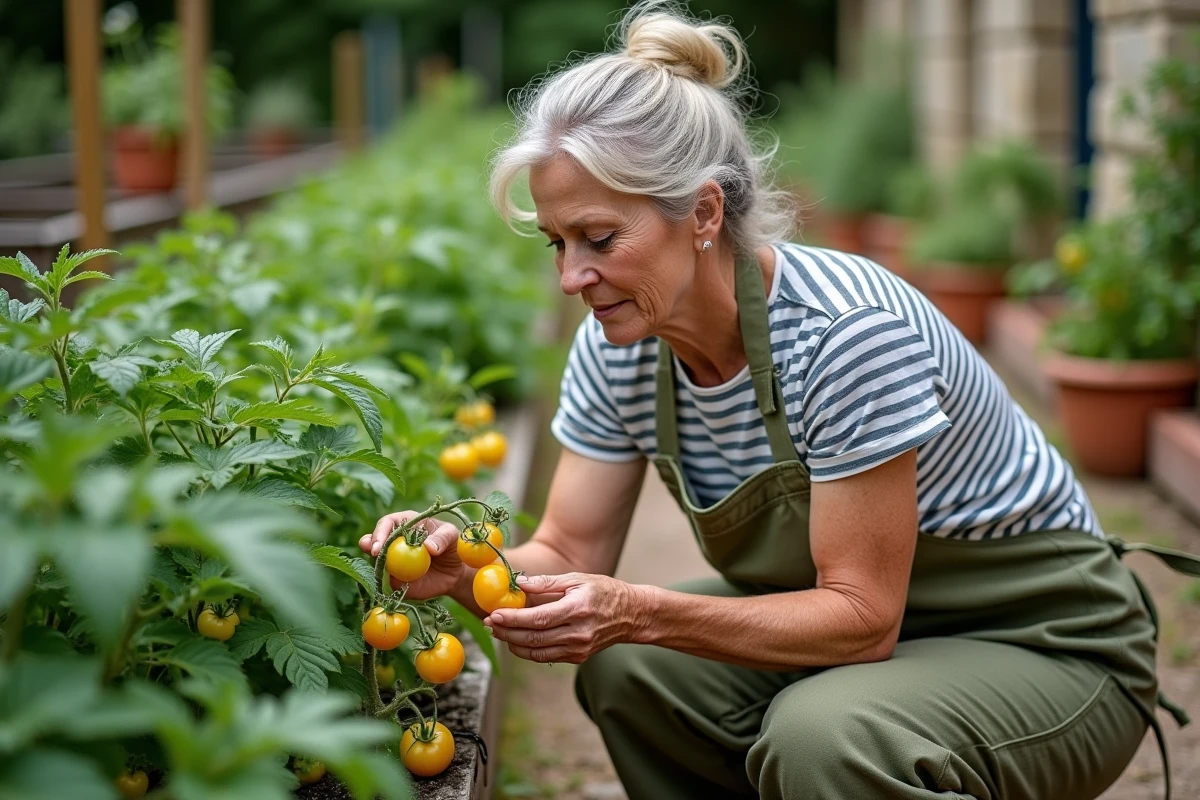
The tomato (Solanum lycopersicum) goes through physiological stages whose duration varies depending on the type of growth, determinate or indeterminate, and the climatic conditions of the environment. Mastering each transition between the vegetative phase, flowering, and fruiting allows for anticipating crop accidents rather than enduring them.
Nocturnal Temperature and Tomato Set: The Often Underestimated Critical Threshold
Setting depends less on daytime heat than on what happens at night. Recent studies confirm a sharp decrease in setting beyond 22-23 °C at night, even when daytime temperatures remain within the optimal range. The plant continues to grow vegetatively, creating the illusion of a healthy plant, but the flowers abort or produce deformed fruits.
This phenomenon is worsening with climate change. In regions where nights used to remain cool ten years ago, we now observe episodes of flower drop during summer heatwaves. The most reliable solution remains varietal choice: determinate types, which concentrate their flowering over a shorter window, handle a brief thermal peak better than an indeterminate type whose flowering spans several months.
To delve deeper into the life cycle and flowering of the tomato, it is essential to keep in mind that the floral transition is not a single event but a repeated sequence, cluster after cluster, each subject to the conditions of the moment.
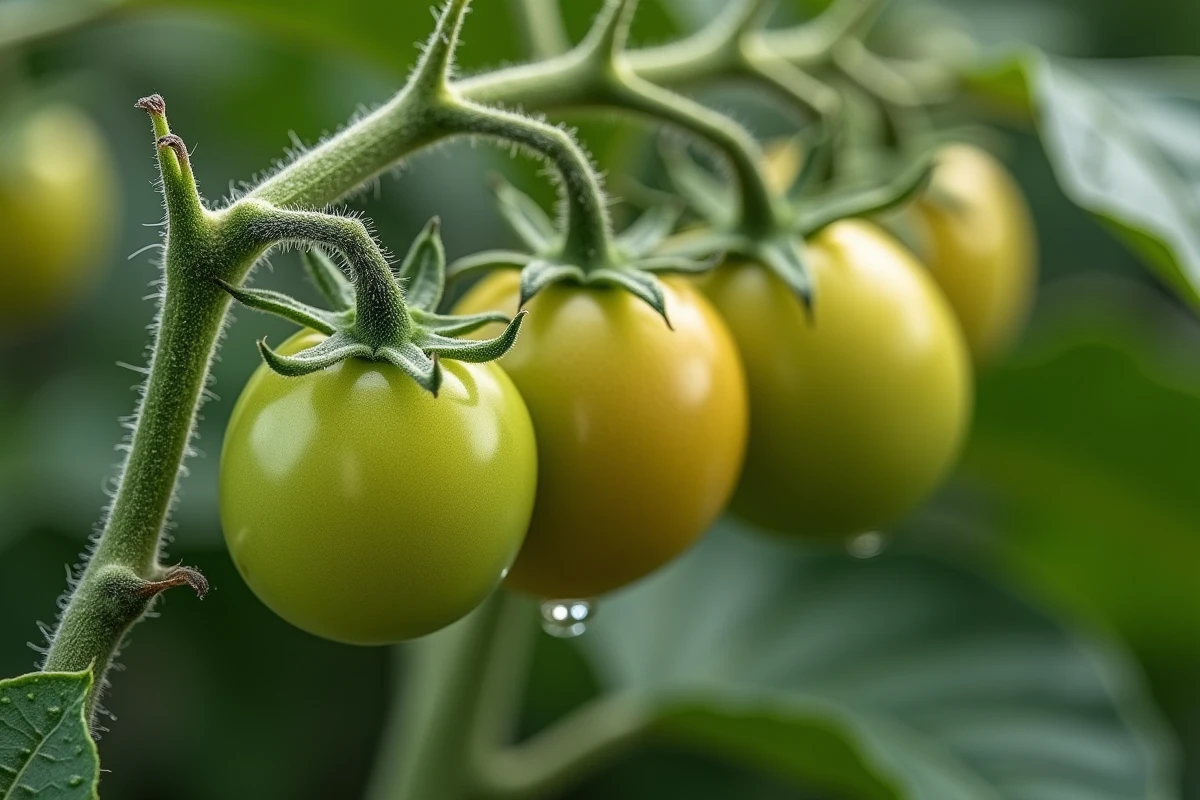
Targeted Spectral LED Lighting: Shortening the Vegetative Phase in Greenhouses
The use of adjustable blue/red spectrum LEDs is becoming widespread in long-duration greenhouse crops, particularly for cluster and cherry tomatoes. The principle relies on manipulating the blue/red light ratio to accelerate floral induction and increase the number of viable flowers per cluster.
European horticultural technical institutes document a shortening of the vegetative phase thanks to these systems. In practice, this means that the plant reaches its first floral cluster earlier, freeing up time at the end of the cycle for better maturation of the last fruits before the autumn decrease in light.
We recommend not to confuse winter supplemental lighting (which aims at overall photosynthesis) with spectral lighting targeted at flowering. The former compensates for a light deficit, while the latter actively drives the transition between phenological stages. Both can be combined, but their objectives differ.
Points of Caution Regarding Light Management
- An excess of blue at the beginning of the cycle produces stocky plants with very short internodes, complicating training on wires for indeterminate types
- The optimal ratio varies by variety: cocktail tomatoes respond more quickly to light stimuli than larger beefsteak types
- LED lighting does not correct a nighttime thermal issue. If nights exceed the critical threshold, setting will remain deficient even under optimized spectrum
Irrigation and Blossom End Rot at the Flowering-Setting Stage
Blossom end rot is not simply a lack of calcium. It is primarily a problem of water consistency around the flowering-setting stage. Recent agronomic studies in France show a strong correlation between sudden variations in substrate moisture and the incidence of this physiological disorder.
Specifically, abundant watering every three days causes more blossom end rot than moderate daily watering, even if the total volume of water is the same. Calcium is present in the soil, but its transport to the fruit depends on a continuous flow of sap. As soon as the plant experiences water stress, even briefly, calcium no longer reaches the apex of the growing fruit.
Maintaining a Narrow Water Range
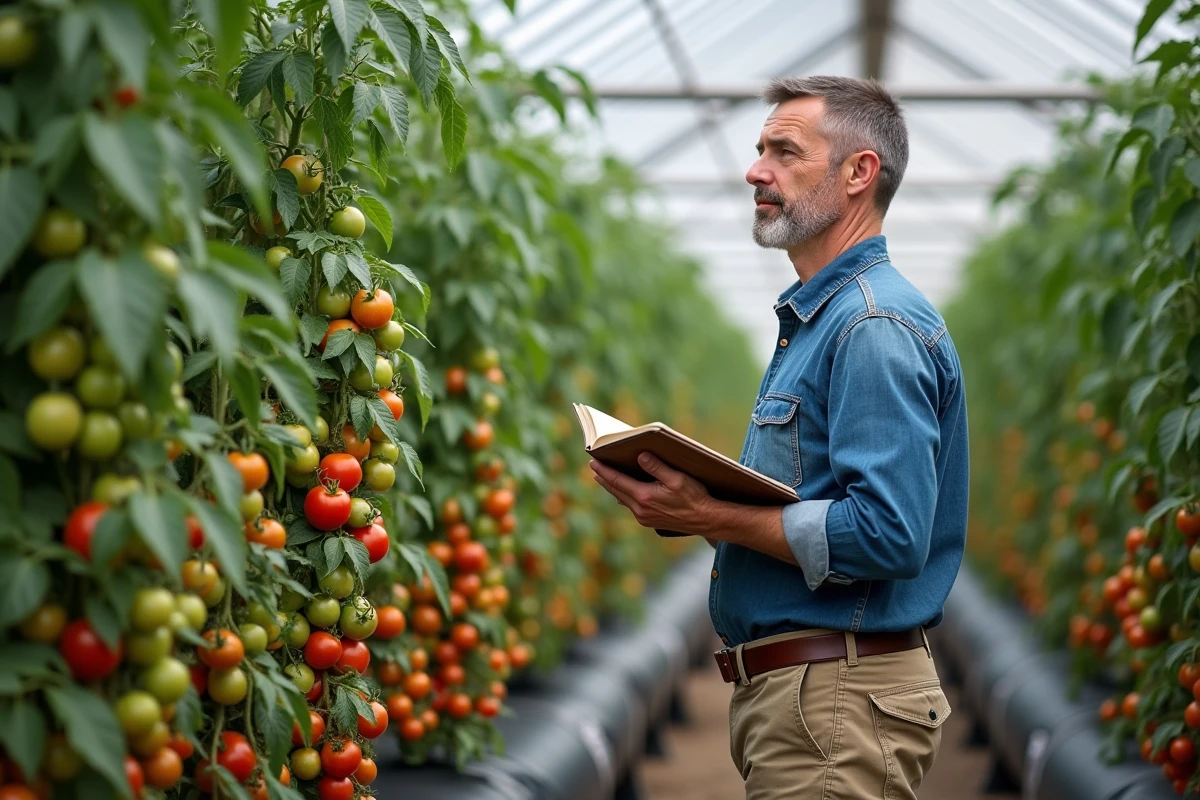
The solution involves tensiometric or capacitive monitoring of the substrate. In open fields, tensiometric probes at -15/-20 cm provide a reliable reading of water availability at the root level. In soilless systems, monitoring drainage (volume and EC) allows for real-time adjustments of irrigation cycles.
We observe that producers who switch from bi-daily watering to a micro-irrigation system divided into four to six smaller applications significantly reduce blossom end rot without increasing their water consumption. The gain lies in consistency, not volume.
Determinate or Indeterminate Growth: Concrete Impact on Cycle Management
Determinate varieties end with a floral cluster. All energy goes into fruiting once flowering is complete, resulting in a grouped harvest. This behavior suits short seasons and mechanical harvesting for processing tomatoes.
Indeterminate varieties produce a stem that elongates indefinitely as long as conditions allow. Flowering is spread out, with a new cluster every two to three nodes. Management is more demanding: pruning suckers, staking, and especially adapting fertilization to the stage of each cluster simultaneously present on the plant.
- An indeterminate can bear both ripe fruits on the first cluster and flowers in the setting stage on the sixth, complicating water and nutritional management
- A determinate concentrates its potassium and calcium needs over a shorter but more intense window
- In the context of recurrent warm nights, the determinate offers superior harvest security as its flowering window, being shorter, is less likely to entirely coincide with a heatwave
The choice between these two types is not a matter of personal preference but a cross-analysis of the local climate, the length of the exploitable season, and the intended management method. A gardener in a Mediterranean zone with nights regularly above the critical threshold in July would benefit from prioritizing an early determinate rather than a classic indeterminate, even if it means chaining two short cycles on the same plot.